
Thursday, November 19, 2026
Wednesday, November 18, 2026
Momo The Blood Taker - Review
Tokyo is plagued by a string of murders where the victims are drained of blood. While the city whispers about vampires, detective Mikogami Keigo seeks to avenge his murdered lover. As he stalks "The Man With Two Faces," Mikogami catches the attention of a mysterious silver-haired girl.

Even though, to borrow and paraphrase a quote from Dr. Fallada (Frank Finlay) in Tobe Hooper's Lifeforce, "that [silver-haired] girl is no girl," Momo nonetheless stumbles across the thin line it desires to dance upon. Which is too bad, because there is a lot about Momo that I really, really like. Maybe could even love.
There is just one gigantic obstacle to my being able to enjoy to the utmost all the bloodletting and monsters splashing across the black and white pages of Momo The Blood Taker. That would be Momo Persephone Dracula her-own-damn-self.
Momo appears to have become a vampire when she was a child. Although her soul, or her consciousness, has aged some 200 years, her body has not. Physically she is still just a kid. Mentally she is an adult.
Off the top of my head, while I type these words, I can name at least four examples of the 'ancient soul in a child's body' trope. Claudia in Interview with the Vampire, Homer in Near Dark, The Anointed One in Buffy The Vampire Slayer, and Eli in Let the Right One In.
And that is just four. There are a lot more than those, I am sure.
What differentiates Momo from the above titles is just how sexualized she is. It was so over the top in its fetishistic approach to showcasing her in, um, well, very sexy lingerie and the not at all unsubtle implication that she, uh, did some vampiric 'cuddling' with an unconscious and mortally wounded Mikogami was just off-putting.
Part of me wants to think it was intentional, but I doubt it.
Which is disappointing, because I really, really liked the nightmarish and dapper Man With Two Faces and the escalating vampire menace.
But I will be doing a little research, as well as a some soul searching, before I decide whether or not to read the next volume of Momo The Blood Taker.
Two Thousand Maniacs! (1964) / Walk on the Wild Side (1962) - Newspaper Ad [Oakland Tribune - November 18, 1964]

Not that the film itself is all that serious. It is not. Two Thousand Maniacs! gleefully over-the-top and in-your-face comedic campiness is almost aggressive. Lewis all but grabs his audience by its collective shoulders and screams "DO NOT TAKE THIS SERIOUSLY" while giving them a hard shake.
That being said, this movie will never be mistaken for something akin to, say, the likes of Blazing Saddles or Young Frankenstein.
No, the seriousness that McCarty is referring to is 100% on the production side. While still a blatantly cheap exploitation picture, Two Thousand Maniacs! nonetheless displays a lot more production value and, dare I say, a bit more technical polish than was in Blood Feast. Lewis even went as far as to pen a novelization of his script!

Yet the movie was nowhere near as profitable as Blood Feast had been, so Lewis never made another creative swing as "big and bold" as he did here. So it goes.
Coupled with Two Thousand Maniacs! at the Coliseum Drive-In would be a re-release of the 1962 romantic drama Walk on the Wild Side, which starred Laurence Harvey, Jane Fonda, and Barbara Stanwyck. The plot synopsis on the IMDB reads, "Poor lovesick white-trash Dove Linkhorn arrives in New Orleans searching for his former girlfriend Hallie Gerard, an artist who works in The Doll House brothel, whose madam Jo Courtney considers her girls to be her property."
That is a real oil and water pairing there. The same cannot be said of the two other drive-in venues showing Two Thousand Maniacs! that week. The Automotive in Concord had it paired with Mario Bava's Black Sabbath, while the Rancho in San Pablo had it screening with The Last Man On Earth, which starred Vincent Price and was an adaptation of Richard Matheson's classic and influential novel I Am Legend.
Tuesday, November 17, 2026
The Stuff 6 [Vacation, Godzilla Minus Zero, Blu-Rays, Soundtracks, and Jigsaw Puzzles]
I forgot to change the episode number on the title card, so it erroneously reads Episode 5 and NOT Episode 6. Oops.
Play Misty for Me (1971) - Newspaper Ad [San Francisco Examiner - November 17, 1971]

Clint Eastwood's directorial debut Play Misty for Me Starts Friday, November 19th at the RKO Golden Gate 2. Which means it would be screening in the "Balconey Theatre" and not the venue's more palatial "Orchestra Theatre."
The Golden Gate opened its doors on March 26, 1922 "with vaudeville on the stage and Wanda Hawley in “Too Much Wife” on the screen." At that time it was graced with a Wurlitzer 3 manual, 13 ranks theatre pipe organ.

According to Cinema Treasures, the Golden Gate converted to a two-screen theatre on December 21, 1966. I assume, of course, that the Wurlitzer 3 had been disassembled and sold off long before that occurred.
The venue closed, as a movie theatre, in the mid-1970s. The first closure occurred on April 4, 1973. When the owners, or management, could not recoup the financial investment that they had made on a planned long-run of the musical film Man of La Mancha (1972), and the distributor refused to release them from the contract.

Only to be restored and reopened in 1979 as a performing arts theatre, which it remains to be to this very day.
As for Play Misty for Me, I think I would have been all of four years old when this opened at the Golden Gate 2. So, no, I have never seen it on the big screen. But I did watch whenever it aired on television. Which is something I recall it doing with a fair degree of regularity.
To this day it remains one of my all-time favorite Clint Eastwood outings.
Monday, November 16, 2026
Allan Quatermain and the Lost City of Gold (1987) - Soundtrack

Jerry Goldsmith had composed and conducted an excellent score for the first film and, to save on production costs, the decision was made to recycle most of it for Allan Quatermain and the Lost City of Gold. Also used were selections from Doc Seltzer's score for The Ambassador (1984) and George S. Clinton's score for Avenging Force (1986), which were owned by The Cannon Group.
Even with all this recycling there were still sections and snippets that needed music. Enter Michael Linn, who composed and conducted said filler, to create what amounts to just a hint and tease of what an actual original score might have sounded like. So it goes.
A Nightmare on Elm Street (1984) - Newspaper Ad [Oakland Tribune - November 16, 1984]

A Nightmare on Elm Street would open at two other East Bay drive-ins on Friday, November 16. Those would be the Union City 6 and the Solano 1 & 2. At all three Elm Street would be shown on a double-bill with The Evil Dead. Not all that surprising as New Line Cinema was the distributor for both and it was most likely a package release for the drive-in circuit.
The film would screen solo at the trio of indoor venues it was booked at. Those were the Cinedome 7 East in Fremont, the Southland Cinemas at the Southland Mall in Hayward, and the Regency Cinemas in Pleasant Hill.
Wednesday, November 11, 2026
Werewolves (2024) - Review
One year after a super moon event turned anyone and everyone exposed to moonlight into a blood-thirsty werewolf, another super moon is about to rise in the night sky. As people across the globe race to fortify their homes, a group of scientists prepare to test a potential cure...

This, I am sad to report, is an Idiot Plot Movie. A movie wherein every single thing that happens is predicated on each and every character being an absolute dolt. It got so bad that, towards the end, I began rooting for the werewolves.

Not that my expectations were all that high to begin with, I knew what kind of movie I was going to see. The problem, I think, was that the people who made Werewolves did not know what kind of movie they were making, or had made.
While the film staggered and splashed across the big screen, my mind drifted back to the Werewolves panel at Son of Monsterpalooza in 2024. That is where I watched star Katrina Law, director Steven C. Miller, suit actor Dane DiLiegro, and effects legend Alec Gillis engage in an entertaining conversation about the making of the film.
A great deal of lip service was paid to the supposed human element of the film. Werewolves, they said, featured characters who were wracked with guilt over having become monsters that murdered or maimed family members, friends, and neighbors. There were also characters that enjoyed and embraced the change. Who yearned to return and revel in yet another bloody night of chaos and carnage.
Which is what I went in expecting to see. There was just one problem, though. Matthew Kennedy's scattershot script does not have people in it. There is no human element to it, at all. What the panel had described and discussed did not resemble what I was watching.
While it was clear that the actors had been directed as if there was a human element to what they were doing, the script gives them nothing. There is little to no backstory, no motivation beyond what is needed to get somebody to move from Point A to Point B, and no sense of menace, scope, or urgency.
For a movie whose elevator pitch might have been "Think The Purge, but with werewolves," I was disappointed by how antsy and impatient the movie made me. Despite all the talk and preparation for the chaos and carnage to come, little to none of it is heard or glimpsed.
Couple that with the primary characters never seeming to be put in any kind of life-threatening danger and what do you have? A 90-minute disappointing nothing burger of a supposed monster movie.
Monday, November 9, 2026
Alien Nation (1988) - Soundtrack

Alien Nation would be the second collaboration between director Graham Baker and Goldsmith, following 1981's The Final Conflict. While Goldsmith's score for Alien Nation might not be as robust as the one he wrote for The Final Conflict, it did not deserve to be rejected.
The story behind Goldsmith's score, told in the liner notes of this limited release from Varèse Sarabande, was more interesting than the film it was written for.
A melody used throughout the score was first written by Goldsmith for the Oliver Stone film Wall Street. After Goldsmith quit Wall Street, he took his theme with him and opted to use it for Alien Nation. When that score was rejected, he recycled his unused melody yet again, for The Russia House (1990). The third time was the charm and the melody became one of Goldsmith's better known and admired love themes. Go figure.
Wednesday, November 4, 2026
The Strange House, Vol. 1 - Review
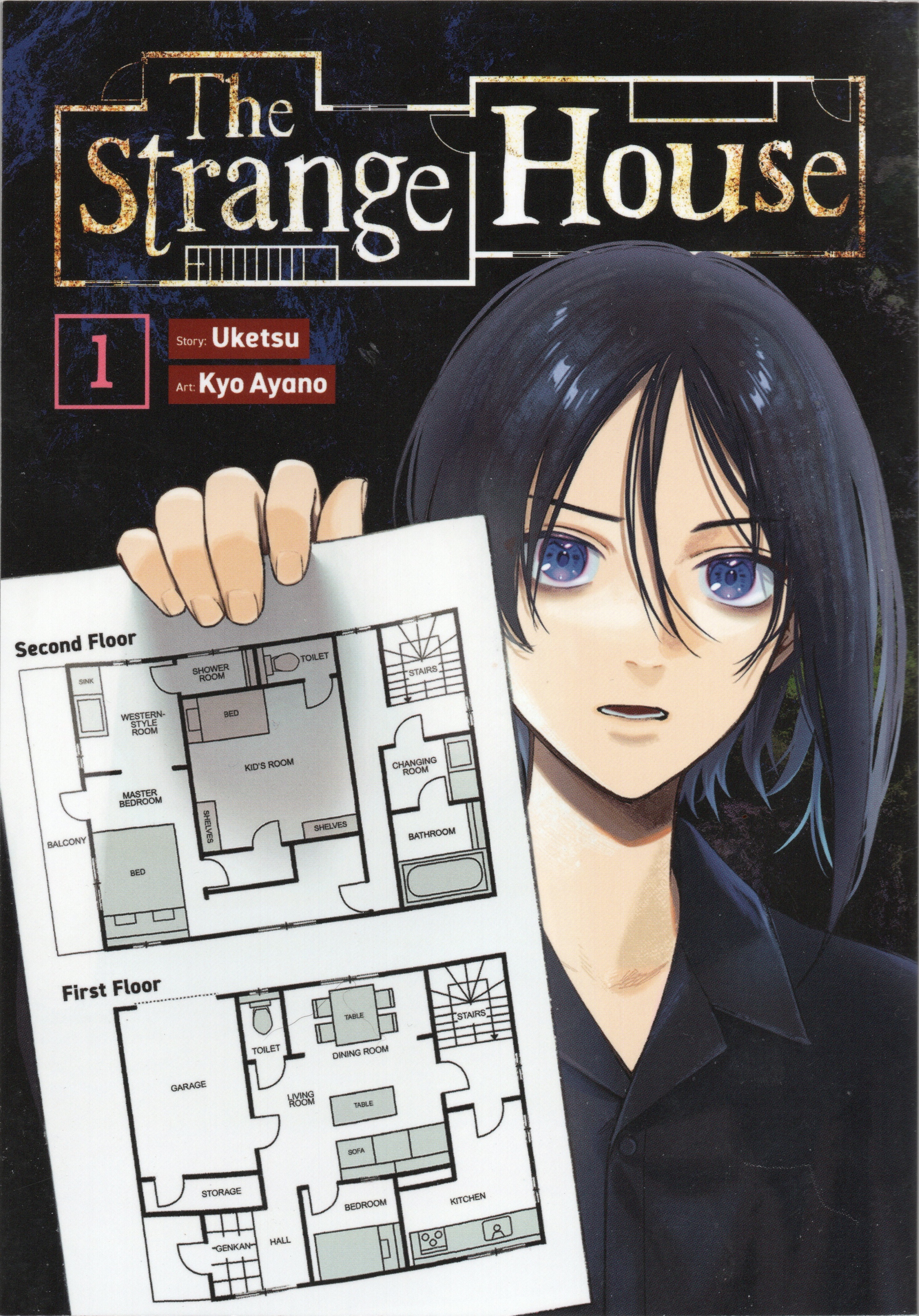
The writer starts questioning her doubt after an architect friend looks at the plans. He notices that there are all manner of weird anomalies in the detached house's design. This gives rise to some strange and unsettling ideas and theories from him about how and why those anomalies are there...
When I started the first volume of The Strange House, I had no idea of what I was in for. The core concept of a house having a sealed room, one that has no windows or doors allowing for either ingress or egress, was vague and confounding enough to get me curious over whether there would be a natural or a supernatural explanation behind it.
Having finished that first volume, I still have no idea of what is or is not going on with, or in, that damn detached house. I just know that I have to read the second volume, so I can find out what, if anything, will happen next.
Even though it is made very clear that there is something very wrong and very weird going on here, whether it has anything to with the house, or if it is just overactive imaginations gone wild, remains to be seen.
All I can share, for now, is that the first volume of The Strange House grabbed my attention and gave my nerves a wee-bit of rattling. I recommend it.
Monday, November 2, 2026
Alien Resurrection (1997) - Soundtrack

Although the album liner notes by Daniel Schweiger acknowledges that the impressive work of Jerry Goldsmith, James Horner, and Elliot Goldenthal on the previous entries had played "no small part in keeping the [Alien] alive in our nightmares." I must draw the line at his description of Alien Resurrection as "the fourth and perhaps most wildly fearsome Alien picture." No. I left the theater disappointed to the point of being angry with the film.
But what of the score and why add it to my collection? Well, I am something of a completist, you see.
"For this fourth evolution in the Alien saga," Schweiger notes, "John Frizzell has centered his thematic thrust on the loss of humanity. While orchestral music is usually employed for the warmth of its strings and brass, [Frizzell] has gone out of his way to take the emotions out of the symphonic colors, to make them as cold and sterile as the film's spacecraft."
This choice and approach, according to an observation made by Schweiger, looks to have grown from the character and presentation of the film's dual female leads. "One woman is a clone while the other is a 'droid' who exhibits more humanity than the [human] crew..."
That choice, to drain the emotion from the symphonic music, might be why I find Frizzell's score solid, but unexceptional. Because nothing in it ever seems to grab or hold my attention. The few time I put it for background music, it just becomes a characterless drone my mind then tunes out and ignores.
Which is why, just as was the case with Goldenthal's score for Alien 3, I chose to pass on upgrading to the 'complete' score expanded edition released by La-La Land Records almost twenty years ago. So it goes.
Sunday, November 1, 2026
Subscribe to:
Posts (Atom)